

Have you ever encountered an unfamiliar word online and struggled to understand whether it describes a technology, a scientific instrument, or a new idea? Messonde is one such term. Its meaning can be confusing because it appears in different online discussions, including measurement technology, personal development, and exploration.
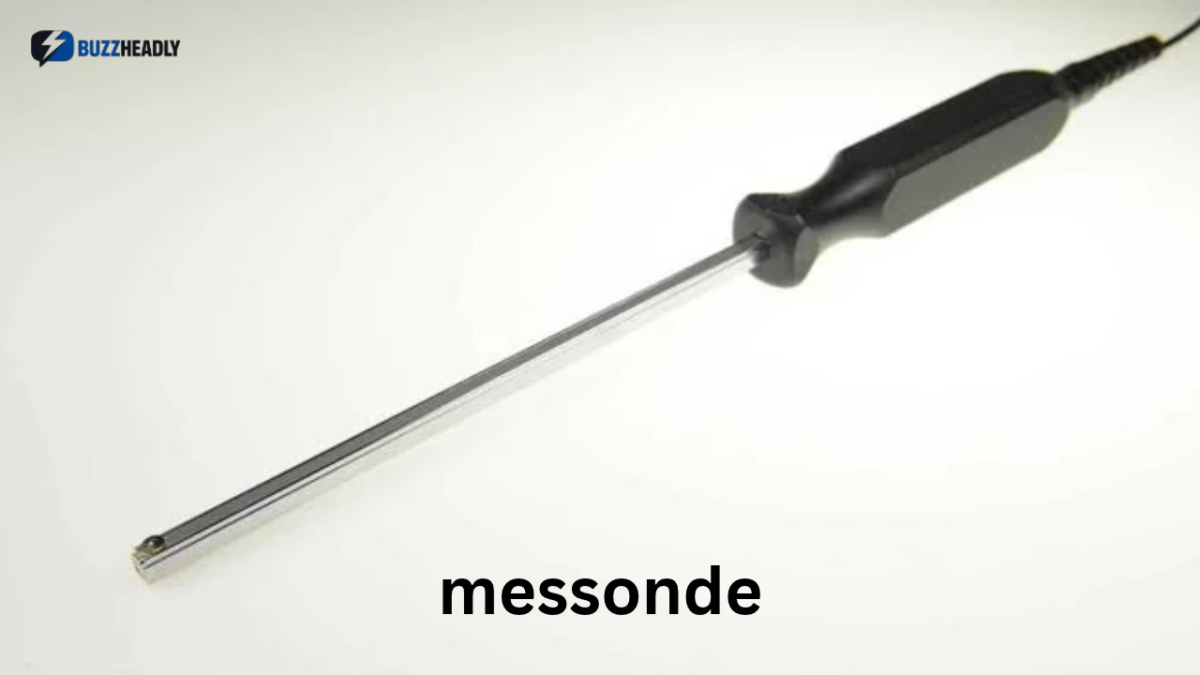
The most useful way to understand Messonde is to examine its context. In technical discussions, it is associated with the German word Messsonde, which refers to a measuring probe or sensing instrument. Such equipment helps collect information about physical conditions, including temperature, pressure, and other measurable properties. Separately, Messonde.com presents the word as a modern invented expression symbolizing exploration, curiosity, and the human journey.
These interpretations should not be confused with one another. One relates to measurement equipment, while the other is a creative concept. This guide explains both meanings, explores practical applications of measuring probes, and shows how to evaluate information about Messonde without accepting unsupported claims.
What Is Messonde?
Messonde is an uncommon term whose meaning depends on where it is used. It does not have one universally accepted definition in standard English.
There are two particularly relevant interpretations:
- Technical interpretation: A possible spelling variation or shortened form associated with the German word Messsonde, meaning measuring probe.
- Modern conceptual interpretation: An invented expression used to represent exploration, discovery, curiosity, creativity, and personal growth.
The technical interpretation is useful when researching sensors and measurement equipment. The conceptual interpretation is relevant to people exploring ideas about learning, personal development, and understanding unfamiliar experiences.
An important distinction is that Messonde does not identify one specific machine, standardized measurement system, or scientifically established personal-development method.
Understanding the Technical Meaning of Messonde
The strongest technical connection is with the German word Messsonde.
The word combines two elements:
- Mess: Associated with measurement and the German verb messen, meaning to measure.
- Sonde: Meaning a probe or instrument used to investigate something.
Together, Messsonde describes a measuring probe.
A measuring probe is a device designed to detect a particular condition and provide information that another instrument or system can interpret.
For example, imagine a factory employee checking the temperature of liquid inside a large storage tank. Instead of estimating the temperature by touching the outside of the tank, the employee uses a suitable temperature probe to obtain a numerical reading.
That reading can help determine whether the liquid is being stored or processed under appropriate conditions.
The spelling Messonde should be treated cautiously, however. The more recognizable German technical spelling is Messsonde, and the two should not automatically be considered separate established technologies.
How Does a Measuring Probe Work?
A measuring probe works by detecting a physical or chemical property and converting that information into a readable signal.
Although designs differ, most measuring systems follow a similar process.
1. Detection
The probe comes into contact with the material or environment being examined, or measures it from a suitable distance.
Depending on its design, it may detect:
- Temperature
- Pressure
- Humidity
- Oxygen concentration
- Electrical conductivity
- Liquid levels
- Chemical properties
2. Signal Conversion
The sensing element responds to the condition being measured.
For example, a temperature sensor may experience a change in electrical resistance as the surrounding temperature changes.
The instrument converts this response into information that can be processed.
3. Data Processing
The connected measuring instrument interprets the signal and calculates a meaningful result.
The result might be displayed as degrees Celsius, pressure units, or another measurement.
4. Display and Recording
The final reading can appear on a digital screen, measuring device, computer, or industrial monitoring system.
Some advanced systems also record measurements over time.
This is particularly useful when a business needs to monitor changing conditions rather than take a single reading.
Different Types of Measuring Probes
Not every measuring probe performs the same task. Selecting the correct type depends on the material, environment, accuracy requirements, and measurement purpose.
Temperature Probes
Temperature probes measure heat and help users monitor whether materials or equipment are operating within acceptable limits.
Common applications include:
- Food processing
- Laboratory testing
- Manufacturing
- Heating and cooling systems
- Industrial equipment monitoring
For example, a food production facility may use temperature probes to check whether ingredients are stored under suitable conditions.
Pressure Probes
Pressure-measuring instruments help determine the force exerted by gases or liquids.
They are useful in:
- Industrial pipelines
- Hydraulic systems
- Water treatment facilities
- Manufacturing equipment
- Process control systems
A pressure reading can help operators recognize abnormal conditions before they develop into more serious equipment problems.
Humidity Probes
Humidity probes measure the amount of moisture present in the air or a particular environment.
They are particularly useful in warehouses, agricultural facilities, laboratories, and climate-control systems.
For example, a storage business dealing with moisture-sensitive materials may use humidity monitoring to reduce the risk of deterioration.
Chemical and Gas Sensors
These instruments detect particular gases or chemical properties.
Depending on the sensor, they may help monitor oxygen levels, gas concentrations, or water quality.
They are commonly relevant to industrial safety, environmental monitoring, and scientific research.
Important: A sensor designed for one substance cannot automatically measure every other substance. Its specifications determine what it can reliably detect.
Where Are Measuring Probes Used in Everyday Life?
Measuring probes are not limited to scientific laboratories. They are part of many systems that people use without necessarily noticing them.
Healthcare and Medical Research
Medical and laboratory equipment uses different types of probes to measure physical conditions and collect information.
For example, temperature sensors help monitor body temperature, while specialized laboratory probes can measure chemical properties in samples.
The important point is that different medical instruments have different accuracy requirements. A general-purpose industrial sensor should not be assumed suitable for medical diagnosis.
Agriculture and Farming
Farmers use soil and environmental sensors to understand growing conditions.
A soil moisture probe, for instance, can help determine whether a particular section of land needs irrigation.
Consider a farmer managing several fields. Without measurements, the farmer might water every field according to the same schedule. With reliable moisture readings, irrigation can be adjusted according to actual soil conditions.
This can improve water management and reduce unnecessary irrigation.
Manufacturing and Industrial Production
Factories frequently depend on measurement equipment to maintain consistent production conditions.
Probes can help operators monitor:
- Machine temperature
- Production pressure
- Liquid conditions
- Environmental humidity
- Chemical concentrations
Imagine a production line where a machine gradually becomes hotter during operation. Continuous temperature monitoring can alert the operator before the equipment reaches an unsafe operating condition.
Environmental Monitoring
Environmental researchers use specialized sensors to investigate changes in natural surroundings.
These systems can monitor water quality, atmospheric conditions, soil properties, and other environmental measurements.
For example, researchers studying a river may collect information about temperature and dissolved oxygen. Comparing readings over several days or months can help identify changes in environmental conditions.
Messonde as a Concept of Exploration and Personal Growth
Apart from its technical association, Messonde has a separate modern interpretation.
The website Messonde.com presents the term as an invented expression representing exploration and the human journey. Its interpretation emphasizes curiosity, self-discovery, creativity, resilience, and learning.
This is a symbolic meaning rather than a recognized psychological theory or established academic philosophy.
Nevertheless, the underlying ideas can be useful when applied practically.
Curiosity and Continuous Learning
Exploration starts with the willingness to ask questions.
For example, someone who has worked in the same professional role for several years might become interested in learning a new skill.
Instead of immediately making a major career change, they could begin with a short course, a small project, or conversations with experienced professionals.
This approach turns curiosity into manageable action.
Personal Discovery
Self-discovery involves understanding your interests, strengths, limitations, and priorities.
A person might discover that they enjoy solving technical problems more than performing administrative tasks.
Recognizing this preference can help them make better decisions about future education and career opportunities.
Creativity and New Experiences
Creativity often develops when people explore unfamiliar subjects.
Someone working in digital marketing, for example, might learn basic data analysis to understand customer behavior more effectively.
Combining existing knowledge with a new skill can produce useful ideas that would not emerge from repeating the same routine.
How to Apply the Messonde Concept in Real Life
If you interpret Messonde as a philosophy of exploration, you can turn its general ideas into a simple daily practice.
Here is one practical approach.
Step 1: Identify something you want to understand.
Choose a question related to your career, education, personal interests, or everyday life.
Step 2: Explore different perspectives.
Read reliable information, ask knowledgeable people, and compare different explanations.
Step 3: Try a small experiment.
Rather than making a major commitment immediately, take a manageable action.
For example, someone interested in website development could create a simple practice website before investing in an expensive training program.
Step 4: Observe the results.
Think about what worked, what was difficult, and what you discovered.
Step 5: Adjust your next step.
Use the experience to decide whether to continue, change direction, or explore another possibility.
The advantage of this approach is that it makes learning practical rather than purely theoretical.
Messonde vs. Messsonde: What Is the Difference?
The similarity between these spellings is a major reason for confusion.
| Feature | Messonde | Messsonde |
|---|---|---|
| Language context | Modern online usage | German |
| Main interpretation | Invented concept or spelling variation | Measuring probe |
| Common association | Exploration and discovery | Sensors and measurement |
| Technical status | Not a standardized equipment category | Recognizable technical term |
| Practical application | Depends on its intended context | Measurement and data collection |
The additional letter in Messsonde is important.
If you are researching engineering equipment, using the German spelling can help you find more precise technical information.
If you are researching the modern symbolic concept, Messonde is the relevant spelling.
Practical Tips for Understanding and Evaluating Messonde
When researching an unfamiliar term, it is easy to accept the first explanation that appears in search results. However, a more careful approach produces better information.
Consider these recommendations:
- Check the original context: Determine whether you encountered the term in an engineering document, personal-development article, or business discussion.
- Verify the spelling: A single missing letter can lead to completely different search results.
- Look for technical documentation: If the discussion involves measurement equipment, check manufacturer specifications and established technical terminology.
- Separate facts from interpretations: A website can introduce its own definition without establishing a universally accepted meaning.
- Look for practical examples: Reliable explanations usually show how an idea or instrument works in a real situation.
- Check publication dates: Recent articles can explain current online usage, but their publication date alone does not establish accuracy.
Three Less Obvious Insights About Messonde
There are three additional points that make this term particularly interesting.
1. A spelling difference can change the quality of technical research.
Searching for Messonde may produce articles about a modern concept, while searching for Messsonde can lead to more useful German technical terminology. Choosing the right spelling is therefore not just a grammar issue; it affects the quality of information you find.
2. Measurement and exploration share an important underlying principle.
A measuring probe collects information about an external environment. Personal exploration involves collecting information through experiences, questions, and reflection. These are not the same activity, but both demonstrate how better information can support better decisions.
3. Measurement accuracy depends on the entire system, not just the probe.
Even a high-quality sensor can produce misleading results if it is incorrectly installed, poorly calibrated, or connected to an unsuitable measuring instrument. This is an important practical consideration that is often overlooked when people focus only on the sensor itself.
Common Misunderstandings About Messonde
Several assumptions can make researching this subject unnecessarily confusing.
- Assuming it is one specific device: Messonde does not identify a single universal measuring instrument.
- Treating it as an established scientific philosophy: Its modern personal-development interpretation is symbolic, not a formally validated psychological framework.
- Confusing it with a software platform: Online discussions do not establish that Messonde is a recognized application or digital service.
- Assuming all probes work identically: Temperature, pressure, humidity, and chemical sensors have different operating principles.
- Ignoring calibration: Measurement results can become unreliable when equipment is not maintained and calibrated appropriately.
Understanding these differences helps readers avoid inaccurate conclusions and choose more relevant information.
FAQ
1. What does Messonde mean?
Messonde is an uncommon term with more than one online interpretation. It is associated with the German technical word Messsonde, meaning a measuring probe, and is also used as an invented expression representing exploration and personal discovery. The correct interpretation depends on the context.
2. Is Messonde a real technology?
Messonde is not the established name of one specific technology or measuring device. Its technical association comes from Messsonde, which refers to measuring probes. Anyone researching equipment should check the actual manufacturer, product specifications, and technical documentation.
3. What is the difference between Messonde and Messsonde?
Messsonde is the German technical term for a measuring probe. Messonde is a less established spelling that may appear in online discussions or as a separate invented name. The additional letter in Messsonde helps distinguish the recognized German technical spelling.
4. What are measuring probes used for?
Measuring probes collect information about physical or chemical conditions. They can be used to measure temperature, pressure, humidity, electrical conductivity, and other properties. Common applications include manufacturing, agriculture, laboratories, healthcare equipment, and environmental research.
5. Is Messonde a personal-development philosophy?
Messonde.com presents the word as a symbolic concept connected with curiosity, exploration, creativity, and personal growth. However, it is not an established academic philosophy or scientifically validated psychological method. People can use its general ideas as inspiration for learning and self-reflection.
6. How can I learn more about Messonde?
Start by identifying the context in which you encountered the word. For technical research, investigate Messsonde and look for reliable engineering documentation. For its modern conceptual meaning, examine how the term is presented by its creator and distinguish personal interpretations from established facts.
Conclusion
Messonde is an interesting term because it connects two different areas of interpretation: technical measurement and modern ideas about exploration.
Its strongest technical association is with Messsonde, the German word for a measuring probe. These instruments play useful roles in manufacturing, agriculture, environmental research, and other industries by collecting accurate information about different conditions.
At the same time, Messonde has been introduced as an invented expression representing curiosity, creativity, and personal discovery. Although this interpretation is not an established scientific philosophy, its general message encourages people to explore unfamiliar subjects and learn from experience.
The most important lesson is to understand the context before accepting a definition. Whether you are researching measurement equipment or exploring a new concept, accurate information and practical understanding will always be more valuable than assumptions.