
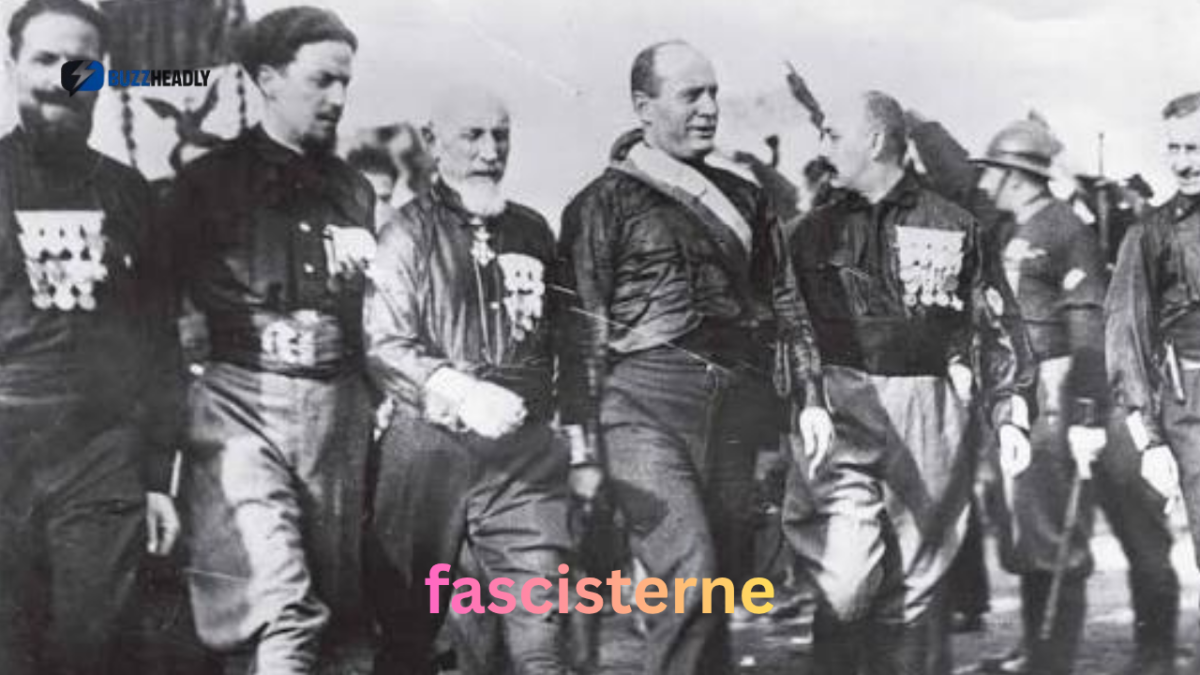

Political terms can carry very different meanings depending on the historical period, country, and situation in which they are used. Fascisterne is a term that appears in Scandinavian-language discussions of politics and history, particularly when people explore fascism, authoritarian governments, and extremist political movements.
The word is Danish and translates into English as “the fascists.” It refers to people or groups associated with fascist beliefs, political movements, or systems of government. Understanding the term requires more than simply knowing its translation. Fascism has influenced European history, contributed to major conflicts, and shaped debates about democracy, nationalism, political freedom, and human rights.
This guide explains what Fascisterne means, where fascism originated, how fascist movements gained influence, and what characteristics distinguish fascist ideology from other political systems. It also examines historical examples, common misunderstandings, and the importance of recognizing authoritarian political behavior. Whether you encountered the word in a Danish article, historical document, or political discussion, this explanation will help you understand its meaning and significance.
What Does Fascisterne Mean?
Fascisterne is a Danish definite plural noun meaning “the fascists.”
It comes from the word fascist, which describes someone who supports or belongs to a fascist political movement.
The distinction between these words is straightforward:
- Fascism: A political ideology associated with authoritarian nationalism and dictatorial leadership.
- Fascist: A person who supports fascism.
- Fascisterne: The fascists, referring to multiple people or a particular group.
The word is also closely related to the Italian term fascismo, which became internationally recognized through the political movement led by Benito Mussolini in Italy.
In historical writing, Fascisterne may refer to members of fascist organizations, supporters of fascist governments, or people participating in fascist political movements.
Its exact meaning depends on the context. For example, a Danish history book might use the term when discussing fascist organizations during the Second World War, while a contemporary political commentator might use it when describing authoritarian nationalist movements.
What Is Fascism?
Fascism is an authoritarian political ideology that emphasizes extreme nationalism, centralized leadership, political obedience, and the subordination of individual freedoms to the interests of a supposedly unified nation.
Historically, fascist movements have rejected liberal democracy, opposed political pluralism, and used propaganda, intimidation, and violence to maintain power.
Fascism does not have one universally agreed academic definition, but historians commonly identify several recurring characteristics:
- Extreme nationalism and national revival.
- A powerful leader presented as the nation’s central authority.
- Rejection of democratic opposition.
- Glorification of military strength and political violence.
- Suppression of independent institutions.
- Hostility toward groups portrayed as enemies of the nation.
- Extensive propaganda and political mobilization.
Not every authoritarian government is necessarily fascist. The combination of ideological nationalism, mass political mobilization, leader worship, and the rejection of democratic pluralism is particularly important when historians classify fascist movements.
Where Did Fascism Begin?
Modern fascism developed in Italy during the years following the First World War.
The country experienced economic difficulties, social unrest, political instability, and widespread dissatisfaction with its political institutions.
Many Italians were frustrated by unemployment, labor conflicts, inflation, and the perception that the country had not received sufficient recognition for its wartime sacrifices.
These conditions created opportunities for extremist political movements.
The Rise of Benito Mussolini
One of the most important figures in fascist history was Benito Mussolini.
Mussolini founded the Italian Fascist movement and established the National Fascist Party in 1921.
His supporters organized political demonstrations, promoted aggressive nationalism, and used violence against socialist organizations and political opponents.
In October 1922, the March on Rome increased pressure on Italy’s political establishment. King Victor Emmanuel III subsequently appointed Mussolini prime minister.
Over the following years, Mussolini dismantled democratic institutions and established a dictatorship.
His government restricted political opposition, controlled important media institutions, and expanded state influence over public life.
Why Did Fascism Attract Support?
Fascism gained support partly because it promised stability during a period of uncertainty.
Its supporters presented authoritarian leadership as a solution to political division, economic instability, and perceived national weakness.
However, these promises came with serious consequences, including political repression, censorship, persecution, and the destruction of democratic freedoms.
This historical example demonstrates how political movements can exploit genuine public frustrations while offering solutions that ultimately weaken individual rights.
Fascisterne in Denmark: A Historical Perspective
The term Fascisterne has particular historical relevance in Denmark because fascist and Nazi-inspired organizations operated in the country during the twentieth century.
Although Denmark had its own fascist movements, they never achieved the same political dominance as Mussolini’s movement in Italy or Hitler’s Nazi Party in Germany.
Early Danish Fascist Movements
During the 1920s, small groups in Denmark became interested in Italian fascism.
These organizations promoted nationalism, anti-communism, authoritarian leadership, and opposition to established labor movements.
However, the Danish fascist movement remained relatively small and fragmented. It attracted some public attention but failed to develop into a major national political force.
Research into Danish fascism also identifies organizations such as Nationalt Ungdomsforbund, Nationalkorpset, and De Jyske Fascister among the early groups influenced by Italian fascism. Taylor & Francis Online+1
The Danish National Socialist Workers’ Party
An important organization in Danish extremist history was the Danmarks Nationalsocialistiske Arbejderparti, commonly abbreviated as DNSAP.
The party was founded in 1930 and followed the German Nazi movement in several important respects.
Its political ideas included:
- Authoritarian nationalism.
- Antisemitism.
- Opposition to communism.
- National Socialist political organization.
- Loyalty to a centralized political leadership.
The party was led by Frits Clausen for much of its existence.
Although it gained some political support, DNSAP never became the governing party of Denmark. It received approximately 2% of the vote in the 1939 and 1943 elections. Taylor & Francis Online+1
Denmark During the Second World War
Germany occupied Denmark on April 9, 1940.
The occupation created a complicated political situation. Danish authorities initially continued operating under German occupation, while resistance movements gradually became more active.
DNSAP attempted to benefit from the new political environment and received support from Germany.
However, German occupation did not automatically make the Danish population supportive of fascism or Nazism.
Many Danes opposed Nazi policies, and resistance activities became increasingly significant during the occupation.
The distinction between collaboration, political membership, passive accommodation, and active resistance is essential when studying this period.
The Danish Resistance Movement
The Danish resistance movement included people who opposed German occupation through underground political activity, intelligence gathering, sabotage, and assistance to persecuted individuals.
In August 1943, growing unrest and resistance activities contributed to the collapse of the Danish government’s cooperation arrangement with the occupying authorities.
The occupation ended in May 1945, when German forces in Denmark surrendered.
This period remains an important part of Danish historical memory because it demonstrates the different choices individuals and institutions faced under authoritarian occupation.
What Were the Main Beliefs of Fascisterne?
Although fascist movements differed between countries, several ideological characteristics appeared repeatedly.
Extreme Nationalism
Fascist organizations presented the nation as more important than individual rights and interests.
They often promoted an idealized national identity and portrayed outside influences or minority groups as threats.
Authoritarian Leadership
Fascist movements generally supported powerful leaders who claimed to represent the true interests of the nation.
Political opposition was treated as an obstacle rather than a legitimate part of democratic life.
Militarism and Political Violence
Fascist movements frequently glorified military strength, discipline, and physical confrontation.
In historical examples, paramilitary groups used intimidation and violence against political opponents.
Suppression of Democracy
Fascist governments sought to eliminate political competition and weaken independent institutions.
They restricted freedom of expression, undermined opposition parties, and concentrated power in the hands of the ruling leadership.
Propaganda and Mass Mobilization
Fascist organizations used speeches, newspapers, public gatherings, symbols, and carefully constructed political messages to influence public opinion.
These techniques helped create a sense of national unity around the movement and its leader.
Fascism vs. Nazism: Are They the Same?
Fascism and Nazism are closely related but should not be treated as completely identical.
| Feature | Italian Fascism | German Nazism |
|---|---|---|
| Main historical leader | Benito Mussolini | Adolf Hitler |
| Country of origin | Italy | Germany |
| Central ideology | Authoritarian ultranationalism | Racially based National Socialism |
| Political organization | National Fascist Party | Nazi Party |
| Racism and antisemitism | Became increasingly important | Central to Nazi ideology |
| Historical outcome | Dictatorship and imperial aggression | Dictatorship, genocide, and expansionist war |
Italian fascism and German Nazism shared authoritarian nationalism, militarism, political repression, and hostility toward liberal democracy.
However, Nazi ideology placed particularly strong emphasis on biological racism, antisemitism, and racial hierarchy.
This distinction matters because understanding historical movements requires examining their specific beliefs and policies rather than treating every authoritarian system as identical. Holocaust Encyclopedia+2
How Did Fascist Movements Gain Public Support?
One of the most important questions in understanding Fascisterne is how extremist organizations gained influence in societies that previously had democratic institutions.
Historical research suggests several recurring factors.
Economic and Social Uncertainty
Periods of unemployment, inflation, political instability, and social conflict can increase public dissatisfaction.
Fascist movements have used these conditions to present themselves as solutions to national problems.
Fear of Political Change
Fear of communism, revolutionary movements, and social instability helped some fascist organizations attract support among people who wanted to preserve existing social structures.
Promises of National Renewal
Fascist leaders often promised to restore national strength, pride, and international influence.
These promises could be attractive to people who felt their country had experienced humiliation or decline.
Political Violence and Intimidation
Some fascist organizations used organized violence to weaken opponents and influence political institutions.
This allowed them to create an atmosphere in which democratic opposition became increasingly difficult.
Cooperation With Established Elites
An important but sometimes overlooked historical factor is that extremist movements did not always gain power independently.
In Italy and Germany, established political figures and institutions made decisions that helped fascist leaders enter government. Their belief that they could control or use these movements contributed to the destruction of democratic systems. CFR Education+1
How to Recognize Fascist Characteristics in Political Movements
Understanding fascist history can help people evaluate modern political movements more carefully.
However, it is important not to label every nationalist, conservative, authoritarian, or unpopular political movement as fascist.
Historians and political researchers generally examine a combination of characteristics.
Here are some questions worth considering:
- Does the movement reject democratic competition and attempt to eliminate political opposition?
- Does it promote an extreme national identity based on exclusion or superiority?
- Does it present one leader as the only legitimate representative of the nation?
- Does it encourage political violence or intimidation?
- Does it attempt to control independent media, courts, and other institutions?
- Does it describe particular communities as enemies who must be removed from national life?
One characteristic alone is not enough to establish that a movement is fascist. Its ideology, organization, political behavior, and historical context must be considered together.
Three Important Insights About Fascisterne
There are three historical lessons that deserve particular attention.
1. Small extremist movements can have an influence beyond their election results.
The Danish DNSAP received only around 2% of the vote, but it maintained an organized political structure and received support from Nazi Germany during the occupation. Electoral popularity alone therefore does not measure every form of political influence.
2. Political collaboration and ideological support are not identical.
People living under occupation may cooperate with authorities for different reasons, including survival, employment, institutional continuity, or ideological agreement. Historians must distinguish these motivations rather than automatically treating every form of cooperation as fascist commitment.
3. Democratic institutions can be weakened through gradual changes.
Historical fascist takeovers did not always happen through one dramatic event. Political appointments, emergency powers, propaganda, intimidation, and restrictions on opposition could gradually transform democratic systems into dictatorships.
These lessons make historical research useful beyond simply remembering the events of the twentieth century.
Common Misunderstandings About Fascisterne
Several misconceptions frequently appear in discussions about fascism.
- All nationalists are fascists: Nationalism exists in many political traditions and does not automatically indicate fascist ideology.
- Fascism and Nazism are identical: They share important characteristics, but Nazi racial ideology had specific features that distinguish it.
- Every dictatorship is fascist: Authoritarian governments can follow different political ideologies and systems.
- Danish fascists controlled Denmark during World War II: DNSAP never became Denmark’s governing party.
- Fascism disappeared completely in 1945: Although major historical fascist regimes were defeated, extremist movements and related ideologies continued to exist in different forms.
Recognizing these distinctions makes political discussions more accurate and historically responsible.
FAQ
1. What does Fascisterne mean in English?
Fascisterne is a Danish word that translates to “the fascists” in English. It refers to multiple people who support or belong to fascist political movements. The term is commonly relevant in discussions of European political history, authoritarianism, and the Second World War.
2. Who were the Fascisterne in Denmark?
Danish fascists were members and supporters of organizations influenced by Italian fascism and German National Socialism. One of the most significant organizations was the Danish National Socialist Workers’ Party, known as DNSAP. Despite gaining some political support, it never became Denmark’s governing party.
3. What is the difference between fascism and Nazism?
Fascism is an authoritarian ultranationalist political ideology that rejects democratic pluralism and emphasizes centralized leadership. Nazism developed as a German variant with particularly strong commitments to racial hierarchy, antisemitism, and territorial expansion. Both systems promoted dictatorship, political repression, and militarism.
4. When did fascism begin?
Modern fascism emerged in Europe during the early twentieth century, particularly after the First World War. Benito Mussolini established the Italian Fascist movement in 1919, helping create the political model that inspired other extremist movements. Fascism became particularly influential in Italy and Germany during the 1920s and 1930s.
5. Did Fascisterne support Nazi Germany?
Some Danish fascist and National Socialist organizations supported Germany and shared important elements of Nazi ideology. DNSAP maintained close connections with Nazi Germany and received German support during the occupation. However, Danish society as a whole did not support these organizations, and many people participated in resistance activities.
6. Why is understanding Fascisterne important today?
Understanding Fascisterne provides insight into how extremist political movements develop and influence society. Studying their history helps people recognize authoritarian practices, political intimidation, propaganda, and attacks on democratic institutions. It also encourages more careful use of political terminology in contemporary discussions.
Conclusion
Fascisterne is the Danish term for “the fascists,” connecting the language of modern political discussion with one of the most consequential ideologies in European history.
From Mussolini’s rise in Italy to the activities of Danish fascist organizations and the German occupation of Denmark, fascism influenced political institutions, public life, and international relations throughout the twentieth century.
The history of Danish fascism is particularly important because it shows that extremist movements can attract attention and maintain political organizations without becoming the majority political force.
Understanding these events requires looking beyond political slogans and examining actual beliefs, policies, organizations, and historical circumstances.
Ultimately, learning about Fascisterne is not simply about understanding a Danish word. It is an opportunity to understand the historical dangers of authoritarianism and why democratic freedoms, independent institutions, and political pluralism matter.