
Choosing the right material for insulation, flooring, or home comfort can be surprisingly difficult. Some products look similar but perform very differently once they are installed. This is one reason why Wollmatten have attracted attention among people interested in natural materials, sustainable construction, and practical household solutions.
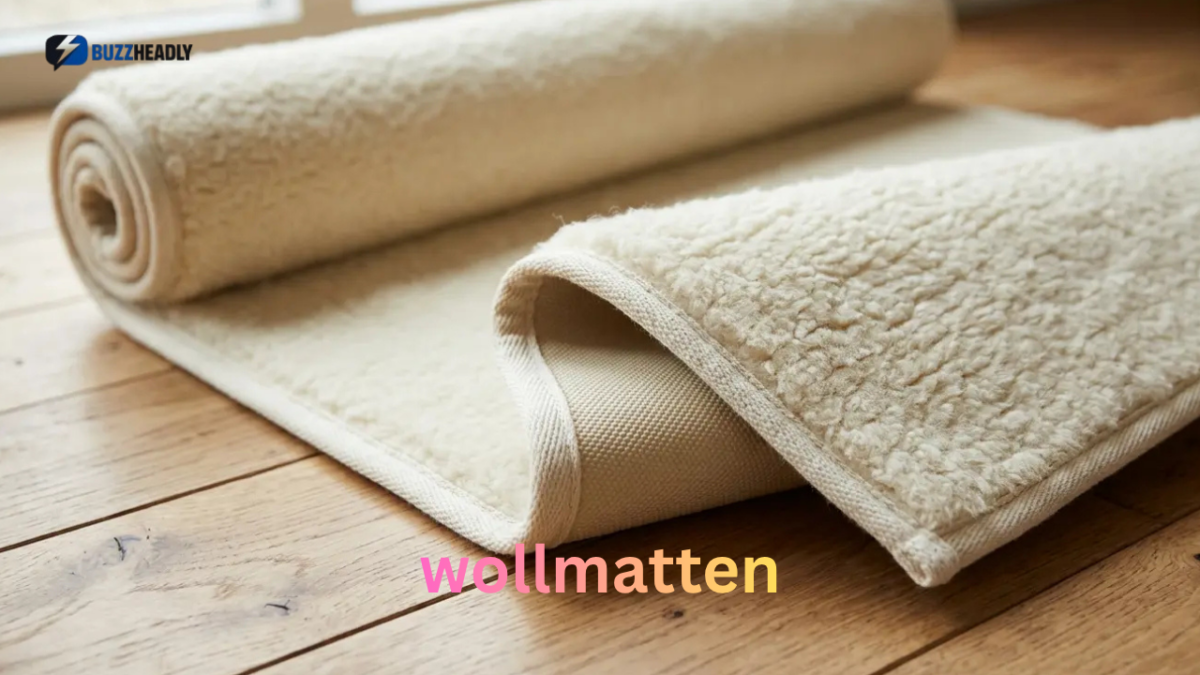
Wollmatten is a German term that translates to wool mats in English. These products are generally made from natural wool fibers, particularly sheep’s wool, and are available in different forms depending on their intended purpose. Some are designed for building insulation, while others are used for sound absorption, flooring, furniture protection, crafts, and decorative applications.
What makes Wollmatten interesting is the natural behavior of wool. Its fibers can trap air, regulate moisture, provide thermal insulation, and offer useful acoustic properties. However, not every wool mat is suitable for every environment.
This guide explains what Wollmatten are, how they are manufactured, where they are used, their advantages and limitations, and what to consider before buying them.
What Are Wollmatten?
Wollmatten are mats or flexible sheets manufactured from wool fibers. The term is commonly associated with sheep wool products, although the exact composition depends on the manufacturer and application.
Unlike conventional synthetic mats, wool mats use animal-based natural fibers that have useful insulating and moisture-regulating characteristics.
They are manufactured in different thicknesses, densities, and finishes to serve different purposes.
Common varieties include:
- Sheep wool insulation mats: Used in roofs, walls, ceilings, and building structures.
- Wool felt mats: Dense materials used for furniture protection, flooring, and crafts.
- Acoustic wool mats: Designed to absorb sound and reduce unwanted reflections.
- Decorative wool mats: Used for interior decoration and household applications.
- Industrial wool mats: Manufactured for specialized technical and protective purposes.
The most important distinction is that a decorative wool mat and a certified building insulation mat are not interchangeable. Their density, composition, fire performance, and installation requirements can be very different.
How Are Wollmatten Manufactured?
The manufacturing process depends on the final product, but sheep wool generally passes through several preparation and production stages.
1. Wool Collection
The process begins with sheep shearing. The collected wool contains natural grease, dust, soil, plant material, and other impurities.
The quality of the raw material influences the consistency of the finished product.
2. Cleaning and Washing
Raw wool is washed to remove dirt, grease, and unwanted organic material.
Manufacturers also prepare the fibers to achieve suitable cleanliness and pH characteristics.
This step is particularly important for insulation products because poorly prepared wool can contain contaminants that affect quality.
3. Fiber Preparation
After cleaning, the wool is opened and separated into individual fibers.
Depending on the product, manufacturers may combine wool with additional natural or synthetic support fibers.
For example, polyester fibers can help provide structural stability and make insulation mats easier to handle.
4. Mat Formation
The prepared fibers are arranged into a consistent layer.
Different manufacturing techniques can be used, including needle felting and other fiber-bonding methods.
The goal is to create a mat with the required thickness, density, flexibility, and strength.
5. Protective Treatment and Finishing
Some wool insulation products receive treatments to protect against moths and other insects.
Additional finishing processes may improve handling, dimensional stability, or resistance to specific environmental conditions.
Buyers should always check the product specification to understand which treatments and additional fibers have been used.
Main Types of Wollmatten
Understanding the different varieties makes it easier to choose the right product.
Sheep Wool Insulation Mats
These mats are primarily designed for thermal insulation in buildings.
They are commonly installed between roof rafters, inside timber-frame walls, and in suitable ceiling constructions.
Their fibrous structure traps air, helping reduce heat transfer.
Wool Felt Mats
Wool felt is made by compacting and interlocking fibers into a dense material.
It is often used for:
- Furniture protection.
- Table coverings.
- Flooring accessories.
- Craft projects.
- Protective padding.
- Decorative interior products.
Wool felt is generally denser than flexible insulation wool, so its applications are different.
Acoustic Wool Mats
Acoustic wool mats are designed to absorb sound energy.
They may be used in interior wall systems, ceilings, studios, offices, and other spaces where sound control is important.
Their performance depends on thickness, density, mounting method, and the complete acoustic construction.
Industrial Wool Mats
Certain wool-based materials are manufactured for technical applications.
Depending on their composition, they may be used for insulation, cushioning, filtration, or protective purposes.
Industrial products should always be selected according to their technical specifications rather than their general wool content.
What Makes Wollmatten Useful?
Wool has several natural characteristics that explain its popularity in different industries.
Natural Thermal Insulation
Wool fibers have a naturally irregular and crimped structure. This structure creates small spaces that trap air.
Because still air is a relatively poor conductor of heat, these spaces help slow heat transfer.
In buildings, properly installed sheep wool insulation can contribute to maintaining comfortable indoor temperatures.
Moisture Regulation
One notable property of wool is its ability to absorb and release water vapor.
Depending on the product, sheep wool insulation can absorb a significant amount of moisture relative to its own weight without immediately feeling wet.
This behavior can help moderate short-term humidity changes within suitable building assemblies.
However, moisture regulation should not be confused with waterproofing. Wollmatten should not be used as a substitute for proper roof protection, damp-proofing, or ventilation.
Sound Absorption
The porous structure of wool materials can help absorb sound.
This makes certain wool mats useful in acoustic applications, particularly where reducing echo and reverberation is important.
However, a wool mat does not automatically provide effective soundproofing. Blocking sound transmission requires an appropriately designed wall, floor, or ceiling assembly.
Flexibility and Easy Handling
Many wool insulation mats are lightweight and flexible.
This makes them relatively easy to cut and fit around timber structures, roof spaces, and building cavities.
Felt versions provide a different benefit: their dense structure can offer cushioning and surface protection.
Where Are Wollmatten Used?
Wollmatten have applications in both residential and commercial environments.
1. Roof and Attic Insulation
Sheep wool insulation mats are commonly used between roof rafters.
They help reduce heat transfer through the roof and can contribute to a more comfortable indoor environment.
For example, someone renovating an older house may install suitable wool insulation between the wooden roof supports to improve thermal performance.
The installation must account for ventilation, moisture movement, and the existing roof structure.
2. Wall Insulation
Wool mats can be used in suitable timber-frame and internal wall constructions.
They fill cavities and help reduce heat transfer through the building envelope.
The selected product must match the construction design and applicable building requirements.
3. Floor and Ceiling Applications
Some wool-based products are used for sound absorption and impact-noise reduction.
They may be incorporated into suitable floor constructions or placed within ceiling systems.
It is important to distinguish between thermal insulation and impact-sound insulation because they require different performance characteristics.
4. Furniture and Interior Design
Dense wool felt mats are useful in household settings.
Common applications include:
- Protective pads beneath furniture.
- Table mats.
- Drawer liners.
- Desk surfaces.
- Decorative wall coverings.
- Cushioning materials.
For example, a felt mat placed beneath a heavy decorative object can help protect a wooden table from scratches.
5. Creative and Craft Projects
Wool felt is also popular for handmade products.
Its flexible yet relatively stable structure makes it suitable for creating decorative accessories, storage organizers, handmade ornaments, and small household products.
6. Commercial and Industrial Buildings
Certain wool-based insulation and acoustic products are used in offices, workshops, technical spaces, and other commercial environments.
The correct product depends on temperature conditions, moisture exposure, acoustic requirements, and applicable safety standards.
Wollmatten vs. Synthetic Insulation Mats
Wool mats and synthetic insulation products serve similar purposes in some applications, but their properties differ.
| Feature | Wollmatten | Synthetic insulation mats |
|---|---|---|
| Main material | Natural wool fibers | Manufactured synthetic fibers |
| Moisture behavior | Hygroscopic | Depends on material |
| Thermal insulation | Good | Varies by product |
| Acoustic performance | Useful in suitable systems | Varies by product |
| Environmental profile | Renewable raw material | Depends on manufacturing and recycling |
| Pest protection | Requires consideration | Depends on composition |
| Price | Often relatively expensive | Available across a wide price range |
Neither material is automatically the best option.
For someone prioritizing natural raw materials and moisture regulation, wool may be attractive. For a project with strict cost, fire-performance, or moisture-resistance requirements, a synthetic or mineral insulation product may be more appropriate.
The final decision should be based on certified product performance rather than material reputation alone.
How to Choose the Right Wollmatten
Buying wool mats without understanding their intended application can lead to unnecessary costs.
Use the following practical checklist.
1. Identify the Purpose
Decide whether you need insulation, sound absorption, furniture protection, or decoration.
This is the first step because each application requires different product characteristics.
2. Check the Material Composition
Look at the percentage of wool and any additional fibers.
Some products contain polyester or other materials to improve stability.
If you prefer a predominantly natural product, verify the actual composition instead of relying on general marketing descriptions.
3. Compare Thickness and Density
Thickness affects insulation and acoustic performance, while density influences handling and structural behavior.
Do not assume that a thicker mat will always provide better results.
Compare the declared technical performance of products designed for the same application.
4. Review Pest Protection
Wool contains keratin, which can be consumed by certain insects, including clothes moth larvae.
Building insulation products therefore need suitable long-term protection.
Ask the manufacturer what treatment has been used and whether it is appropriate for your intended environment.
5. Examine Fire Performance
Natural wool has useful fire-related characteristics, but this does not mean every wool mat is fireproof.
Check the tested fire classification of the complete product.
This is especially important for building projects and commercial installations.
6. Consider Installation Requirements
Some mats are designed to fit between structural members, while others require mechanical fixing or additional support.
Read the installation instructions before purchasing.
7. Compare Long-Term Value
Compare the purchase price with expected service life, installation costs, maintenance, and performance.
A cheaper product may not be economical if it does not meet the project’s technical requirements.
Advantages and Disadvantages of Wollmatten
Like any material, wool mats have strengths and limitations.
Advantages
- Made from renewable wool fibers.
- Good thermal insulation potential.
- Useful moisture-regulating properties.
- Can provide sound absorption.
- Flexible and relatively easy to process.
- Available in different densities and formats.
- Some products can be reused or recycled.
Disadvantages
- Often more expensive than conventional alternatives.
- Requires suitable protection against insects.
- Not every product is suitable for wet environments.
- Fire performance varies between products.
- Some versions contain synthetic support fibers.
- Quality and technical performance vary by manufacturer.
An important consideration is that natural materials are not automatically maintenance-free. Their performance depends on correct product selection, installation, and environmental conditions.
Environmental Benefits of Wollmatten
Wool is a renewable natural resource because sheep produce new fleece that can be collected through regular shearing.
Using wool in insulation and other products can also provide a productive use for wool that may otherwise have limited commercial value.
The environmental profile depends on several factors:
Raw material sourcing: Locally sourced wool may reduce transportation requirements.
Manufacturing: Washing, processing, and protective treatments all influence environmental impact.
Product composition: Products without unnecessary synthetic components may be easier to reuse or recycle.
Product lifespan: A durable mat that remains effective for many years can offer greater long-term value.
End-of-life management: Untreated wool may have more disposal or recovery options than products containing certain chemical treatments or synthetic components.
A useful but often overlooked point is that the environmental benefit of wool depends heavily on what happens after installation. A product that cannot be separated from other building materials may be harder to recover, even if its original fibers are natural.
Common Mistakes to Avoid When Buying Wollmatten
Before making a purchase, watch out for these common mistakes:
- Choosing based on appearance: A decorative felt mat is not necessarily suitable for building insulation.
- Ignoring technical specifications: Check thermal conductivity, density, and application suitability.
- Assuming wool is waterproof: Wool can regulate moisture but does not replace waterproofing.
- Overlooking insect protection: Confirm that the product has appropriate pest protection.
- Ignoring fire classifications: Always check the tested performance of the actual product.
- Buying the wrong thickness: Match the product to the available space and construction requirements.
- Skipping installation guidance: Incorrect installation can reduce performance and create moisture problems.
FAQ
1. What does Wollmatten mean in English?
Wollmatten is a German word that translates to wool mats. It generally describes mats or sheets manufactured from wool fibers, particularly sheep’s wool. Depending on their construction, they can be used for insulation, acoustic treatment, furniture protection, and crafts.
2. Are Wollmatten good for home insulation?
Yes, suitable sheep wool insulation mats can provide effective thermal insulation in roofs, walls, and ceilings. Their fibers trap air and help regulate moisture within appropriate building assemblies. However, product specifications, installation quality, and moisture protection are essential for good results.
3. Can Wollmatten reduce noise?
Certain wool mats can absorb sound and help reduce echo and reverberation inside rooms. Their effectiveness depends on material density, thickness, placement, and the surrounding construction. They should not automatically be considered complete soundproofing solutions.
4. Are wool mats environmentally friendly?
Wool is a renewable natural material, and wool mats can have a favorable environmental profile when responsibly sourced and manufactured. Their overall impact depends on transportation, processing, chemical treatments, additional fibers, and end-of-life disposal. Checking the product’s composition and environmental documentation provides a more reliable assessment.
5. Do Wollmatten need special maintenance?
Maintenance depends on the type of wool mat and its intended use. Decorative felt mats may need regular dust removal and careful spot cleaning, while insulation mats generally remain inside building structures and require little routine maintenance. Always follow the manufacturer’s cleaning and care instructions.
6. Are Wollmatten suitable for damp areas?
Not every wool mat is suitable for areas exposed to persistent moisture. Although wool can absorb and release water vapor, prolonged wet conditions may create problems with the surrounding construction and material performance. For bathrooms, basements, or other damp environments, choose a product specifically approved for the intended conditions.
Conclusion
Wollmatten offer a versatile way to use natural wool fibers in construction, interior design, acoustic applications, and everyday household products.
Their main strengths include thermal insulation, moisture regulation, sound absorption, flexibility, and the use of a renewable raw material. However, these benefits depend on selecting the correct type of wool mat for the intended purpose.
Before purchasing, compare material composition, thickness, density, pest protection, fire performance, and installation requirements. For building applications, always prioritize certified technical specifications and professional installation guidance.
Whether you are improving home insulation, protecting furniture, or exploring natural materials for a creative project, understanding the differences between wool mats will help you make a more practical and informed choice.