
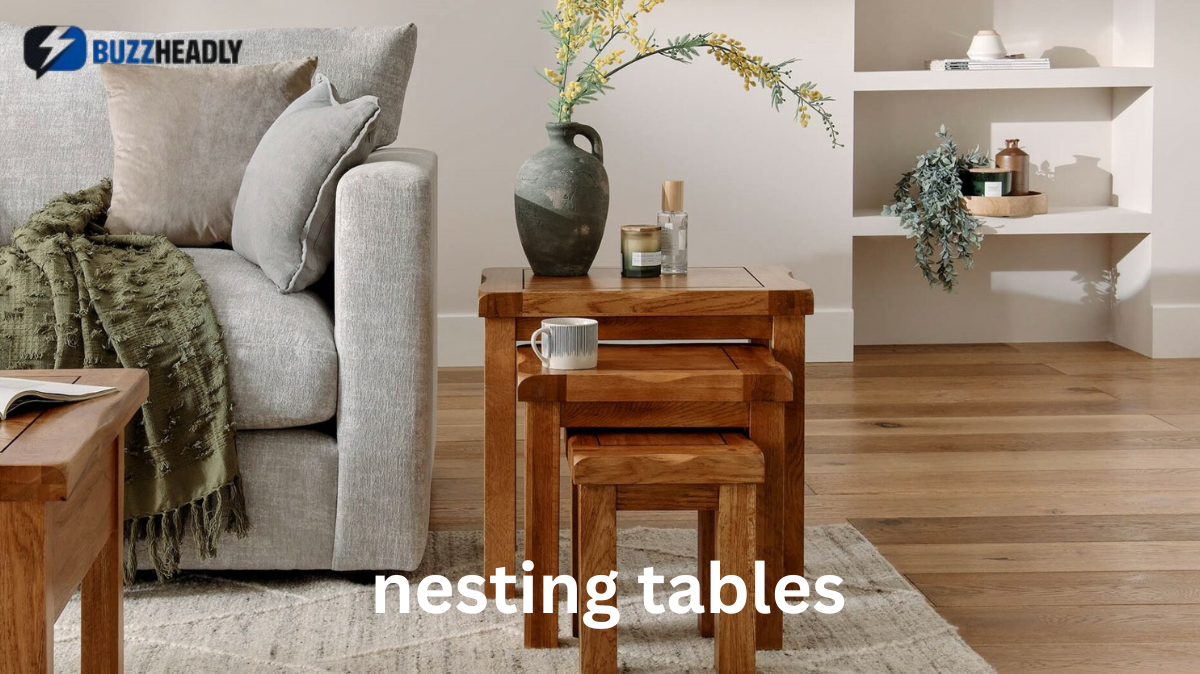

A nesting tables set of 2 can solve one of the most common living room problems: needing extra table space without crowding the room. Many homes have the same issue. The sofa needs a side table, guests need somewhere to place drinks, and the room still has to feel open enough to move around comfortably. A bulky coffee table may look good at first, but it can make a small space feel tight very quickly.
That is where nesting tables become useful. They slide together when you do not need them and separate when you want more surface area. You can use them beside a sofa, between two chairs, near a bed, on a patio, or even as flexible display pieces in a retail setting.
This guide explains how nesting tables work, which styles fit different spaces, how to choose between a set of 2 and a set of 3, and what to consider when comparing wood, metal, marble, black, round, vintage, modern, outdoor, IKEA, Pottery Barn, and West Elm nesting tables.
What Are Nesting Tables?
Nesting tables are a group of tables designed in different sizes so the smaller table can slide underneath the larger one. They are sometimes called nest tables, stacking tables, or tiered side tables.
The basic idea is simple: you get multiple tables while only using the floor space of one when they are tucked together.
Most nesting tables come in:
- A nesting tables set of 2
- A nesting tables set of 3
- Round nesting tables
- Rectangular nesting tables
- Square nesting tables
- Coffee table-style nesting sets
- Small side table sets
They are popular because they work in real homes, not just styled rooms. You can pull out the smaller table when someone visits, use one for snacks, one for a laptop, and one for a lamp, then slide them back together afterward.
Why Nesting Tables Are So Practical
Nesting tables are not only decorative. Their real value is flexibility.
A normal side table stays in one place. A nesting table set can move with your needs. One table can stay beside the sofa while the smaller one moves closer to a chair. During a gathering, the pieces can act as mini drink stations. In a small apartment, they can replace a larger coffee table.
They are especially useful for:
- Small living rooms
- Studio apartments
- Guest rooms
- Reading corners
- Outdoor patios
- Retail displays
- Family rooms
- Homes with flexible seating
The biggest benefit is that you do not have to choose between space and function. You get both.
Nesting Tables Set of 2 vs Set of 3
One of the first choices shoppers face is whether to buy a set of 2 or a set of 3. Both can work beautifully, but they serve slightly different needs.
Nesting Tables Set of 2
A nesting tables set of 2 is best when you want a clean, simple look. It usually includes one larger table and one smaller table.
Choose a set of 2 if:
- Your room is small
- You want a minimalist look
- You only need occasional extra surface space
- You are placing the tables beside a sofa or chair
- You want less visual clutter
A set of 2 is often easier to style because it feels intentional without looking busy. It is also a good choice for bedrooms, apartments, and narrow living rooms.
Nesting Tables Set of 3
A nesting tables set of 3 gives you more flexibility. It usually includes large, medium, and small tables.
Choose a set of 3 if:
- You entertain often
- You have a larger living room
- You want layered styling
- You need separate surfaces for drinks, books, plants, or decor
- You like a more traditional nesting table look
A set of 3 can be very practical, but it needs enough breathing room. In a tight space, three tables can feel crowded if they are not scaled correctly.
Best Nesting Tables for Living Room Use
Nesting tables for living room spaces should be chosen based on how people actually move through the room. A table may look perfect online, but if it blocks the walkway or sits too low beside the sofa, it becomes annoying fast.
For a living room, think about:
- Sofa height
- Armrest height
- Walking paths
- Rug size
- Coffee table placement
- How often guests visit
- Whether kids or pets use the room
A good rule is to keep the tallest nesting table close to the height of your sofa arm. If it is too low, it feels awkward for drinks. If it is too high, it may look more like a plant stand than a side table.
For nesting tables living room styling, try placing the larger table beside the sofa and pulling the smaller one forward only when needed. This keeps the room tidy but still practical.
Small Nesting Tables for Tight Spaces
Small nesting tables are perfect for apartments, corners, and rooms where a full coffee table would feel too heavy. They give you usable surfaces without taking over the floor.
A small set works well:
- Beside an accent chair
- Next to a low sofa
- In a reading nook
- Between two small chairs
- Near a window
- As a compact nightstand alternative
The main mistake people make with small nesting tables is choosing pieces that are too delicate for daily use. A tiny table may look stylish, but if it cannot hold a mug, book, remote, or small lamp comfortably, it may become more decorative than useful.
Look for balance. Small should still mean functional.
Round Nesting Tables
Round nesting tables are a strong choice for living rooms because they soften the space. Sofas, rugs, shelves, and TV units are usually rectangular, so round tables help break up all the straight lines.
They are also safer in busy homes because they do not have sharp corners. This makes them helpful in rooms with children, pets, or narrow walkways.
Round nesting tables work especially well with:
- Sectional sofas
- Curved chairs
- Small apartments
- Soft modern interiors
- Boho or Scandinavian rooms
- Cozy family spaces
The only drawback is that round tops may offer slightly less usable corner space than square or rectangular tables. For drinks and decor, they are great. For laptops or paperwork, rectangular tables may be better.
Wood Nesting Tables
Wood nesting tables are warm, classic, and easy to blend with many decorating styles. They can look rustic, modern, farmhouse, vintage, or traditional depending on the finish and shape.
Common wood looks include:
- Oak
- Walnut
- Mango wood
- Pine
- Ash
- Reclaimed wood
- Veneer finishes
Wood nesting tables are a smart choice if your room already has natural textures, woven baskets, linen, leather, or warm neutral colors. They make a space feel grounded and lived-in.
One practical tip: check whether the top is solid wood, veneer, or engineered wood. Solid wood can be durable and long-lasting, but it may need more care. Veneer can still look beautiful, but it should be protected from standing water and heat.
Metal Nesting Tables
Metal nesting tables are strong, slim, and often more modern. They are useful when you want a lighter visual profile because metal frames can be thinner than bulky wooden legs.
Metal nesting tables work well in:
- Industrial interiors
- Modern apartments
- Minimalist rooms
- Retail spaces
- Outdoor covered areas
- Rooms with black, brass, bronze, or chrome accents
A metal frame can make the tables feel cleaner and less heavy. However, pay attention to the top material. A metal frame with a glass top feels airy. A metal frame with wood feels warmer. A metal frame with marble feels more polished and formal.
Also check floor protection. Metal legs should have levelers, rubber feet, or protective pads so they do not scratch flooring.
Marble Nesting Tables
Marble nesting tables can instantly make a room feel more elegant. They work especially well in formal living rooms, modern apartments, and spaces with brass, black, cream, or deep green accents.
The appeal of marble is its natural pattern. Every piece can look slightly different. That gives the tables character, but it also means the exact veining may not match what you expect.
Before buying marble nesting tables, remember:
- Marble can stain if not sealed or protected
- Acidic liquids can mark the surface
- Stone tops can be heavy
- The tables may be harder to move often
- Coasters are important
Marble is best when you want beauty and are willing to care for it. For a family room with kids, snacks, and daily spills, a faux marble or stone-look surface may be easier.
Black Nesting Tables
Black nesting tables are popular because they create contrast. They can make a light room feel more defined and make a modern room feel sharper.
They pair well with:
- White walls
- Beige sofas
- Gray sectionals
- Warm wood floors
- Brass accents
- Modern rugs
- Industrial decor
A black nesting table set is also forgiving in busy homes because darker finishes can hide some marks better than pale surfaces. However, glossy black tops may show fingerprints and dust more easily.
For a softer look, choose matte black or black wood grain. For a bold look, choose black metal and glass or black marble-style tops.
Outdoor Nesting Tables
Outdoor nesting tables are useful for patios, balconies, gardens, and poolside seating. They give you flexible space for drinks, snacks, plants, candles, or small serving trays.
When choosing outdoor nesting tables, check for weather-friendly materials such as:
- Powder-coated metal
- Treated wood
- Plastic or resin
- Outdoor-safe composite materials
- Rust-resistant frames
An IKEA GRYTSHOLM nesting tables set of 2 is an example of the kind of outdoor nesting table shoppers may compare when looking for compact patio furniture. The key is not just style, but weather resistance.
If your patio is uncovered, avoid indoor-only wood, untreated metal, or delicate stone finishes unless you are willing to store them during bad weather.
IKEA, Pottery Barn, and West Elm Nesting Tables
Many shoppers compare IKEA nesting tables, Pottery Barn nesting tables, and West Elm nesting tables because each brand tends to appeal to a different type of buyer.
IKEA Nesting Tables
IKEA nesting tables usually attract people who want practical design, compact sizing, and budget-conscious options. They are often useful for apartments, first homes, patios, and simple living room setups.
If you are considering IKEA nesting tables, focus on measurements, assembly, material, and whether the table is indoor or outdoor rated.
Pottery Barn Nesting Tables
Pottery Barn nesting tables often appeal to people who want a more classic, polished, or timeless look. They may suit traditional living rooms, transitional interiors, and homes where furniture is expected to feel substantial.
When comparing Pottery Barn nesting tables, pay close attention to weight, finish, care instructions, and whether the set is designed as side tables or coffee tables.
West Elm Nesting Tables
West Elm nesting tables often fit modern, mid-century, and contemporary spaces. Their designs may include mixed materials such as wood, metal, glass, or stone.
When looking at West Elm nesting tables, consider whether the style works with your existing sofa, rug, lighting, and other furniture. A table can be beautiful on its own but still feel wrong if it does not match the room’s proportions.
Retail Display Nesting Tables
Retail display nesting tables are different from home nesting tables because they need to support products, customer interaction, and visual merchandising.
Retail nesting tables are useful for:
- Clothing boutiques
- Gift shops
- Home decor stores
- Seasonal displays
- Pop-up shops
- Product launches
- Window displays
The advantage is flexibility. A store can layer products at different heights, create a fuller display, and rearrange the layout without replacing the fixtures.
For retail use, durability matters more than delicate design. The tables should be stable, easy to clean, and strong enough for repeated product handling.
Vintage Nesting Tables
Vintage nesting tables bring charm and character. They often have details you do not see in newer furniture, such as carved legs, curved edges, inlay patterns, brass details, or darker wood finishes.
They work beautifully in:
- Traditional homes
- Eclectic interiors
- Cottage-style rooms
- Antique-inspired spaces
- Reading corners
- Bedrooms
Before buying vintage nesting tables, inspect them carefully. Check for wobbly legs, water rings, loose joints, peeling veneer, and uneven nesting. A set can look lovely but become frustrating if the smaller tables do not slide smoothly underneath the larger one.
A unique advantage of vintage sets is that they can make a room feel collected instead of showroom-perfect.
Modern Nesting Tables
Modern nesting tables usually have cleaner lines, simpler shapes, and less ornament. They often use materials like metal, glass, black wood, marble, or light oak.
Modern nesting tables are ideal if you want the room to feel open and uncluttered.
Look for:
- Slim frames
- Rounded edges
- Neutral finishes
- Mixed materials
- Simple silhouettes
- Balanced proportions
The best modern nesting tables do not fight for attention. They support the room quietly while still adding style.
Common Mistakes When Buying Nesting Tables
Choosing the Wrong Height
A nesting table should be easy to reach from your seat. If it sits much lower than your sofa arm, it becomes awkward. If it is too tall, it may feel out of place.
Ignoring the Smallest Table
People often measure only the largest table. But the smallest table matters too. It should be useful when pulled out, not so tiny that it only holds one small item.
Forgetting the Floor Space When Open
Nested tables look compact when stacked, but they need extra room when separated. Make sure your space can handle them when all pieces are in use.
Choosing Style Over Stability
A lightweight table may look elegant but wobble during daily use. Stability is especially important if you have children, pets, or guests using the tables often.
Using Indoor Tables Outside
Outdoor nesting tables need outdoor-safe materials. Indoor tables can warp, rust, stain, or fade quickly if placed on a patio.
How to Style Nesting Tables Naturally
Nesting tables look best when they are useful, not overloaded. Keep styling simple.
Try this approach:
- Put a lamp or plant on the largest table.
- Keep the smaller table mostly clear for daily use.
- Add a tray if you want to group small items.
- Use coasters to protect the surface.
- Leave enough space so the smaller table can slide in and out easily.
For living rooms, avoid filling every tabletop with decor. The beauty of nesting tables is that they are ready when needed. If every surface is covered, the flexible function disappears.
FAQ
What is the purpose of nesting tables?
Nesting tables give you extra table space without taking up too much room. The smaller tables slide under the larger one when not in use. They are useful for living rooms, bedrooms, patios, and small apartments where flexible furniture matters.
Is a nesting tables set of 2 better than a set of 3?
A nesting tables set of 2 is better for small rooms, simple layouts, and minimalist styling. A nesting tables set of 3 is better if you entertain often or want more flexible surfaces. The right choice depends on your room size and how often you will separate the tables.
Are nesting tables good for living rooms?
Yes, nesting tables for living room spaces are very practical because they work as side tables, extra drink tables, or compact coffee table alternatives. They are especially helpful when guests visit. Just make sure the height and size match your sofa and seating layout.
What material is best for nesting tables?
Wood nesting tables feel warm and classic, metal nesting tables feel slim and modern, and marble nesting tables feel elegant. Outdoor nesting tables should use weather-safe materials. The best material depends on your style, budget, and how much daily wear the tables will get.
Can nesting tables be used outdoors?
Yes, but only if they are made for outdoor use. Outdoor nesting tables should resist moisture, rust, sun exposure, and temperature changes. Indoor wood, untreated metal, or delicate stone tables may not last long outside.
Are round nesting tables better than square ones?
Round nesting tables are better for softening a room and avoiding sharp corners. Square or rectangular nesting tables may offer more usable surface space for laptops, books, or trays. Choose round for flow and safety, and rectangular for practical surface area.
Conclusion
Nesting tables are one of the easiest ways to make a room more flexible without making it feel crowded. A nesting tables set of 2 works well for small spaces and simple layouts, while a nesting tables set of 3 gives you more options for guests, styling, and daily use.
The best choice depends on where you will use them, how often you need extra surface space, and which material fits your lifestyle. Wood adds warmth, metal adds structure, marble adds elegance, black finishes add contrast, and outdoor nesting tables bring flexibility to patios and balconies.
Whether you are comparing IKEA nesting tables, Pottery Barn nesting tables, West Elm nesting tables, vintage nesting tables, or modern nesting tables, focus on real-life use first. A good set should look beautiful, fit your space, move easily, and make everyday living a little more convenient.